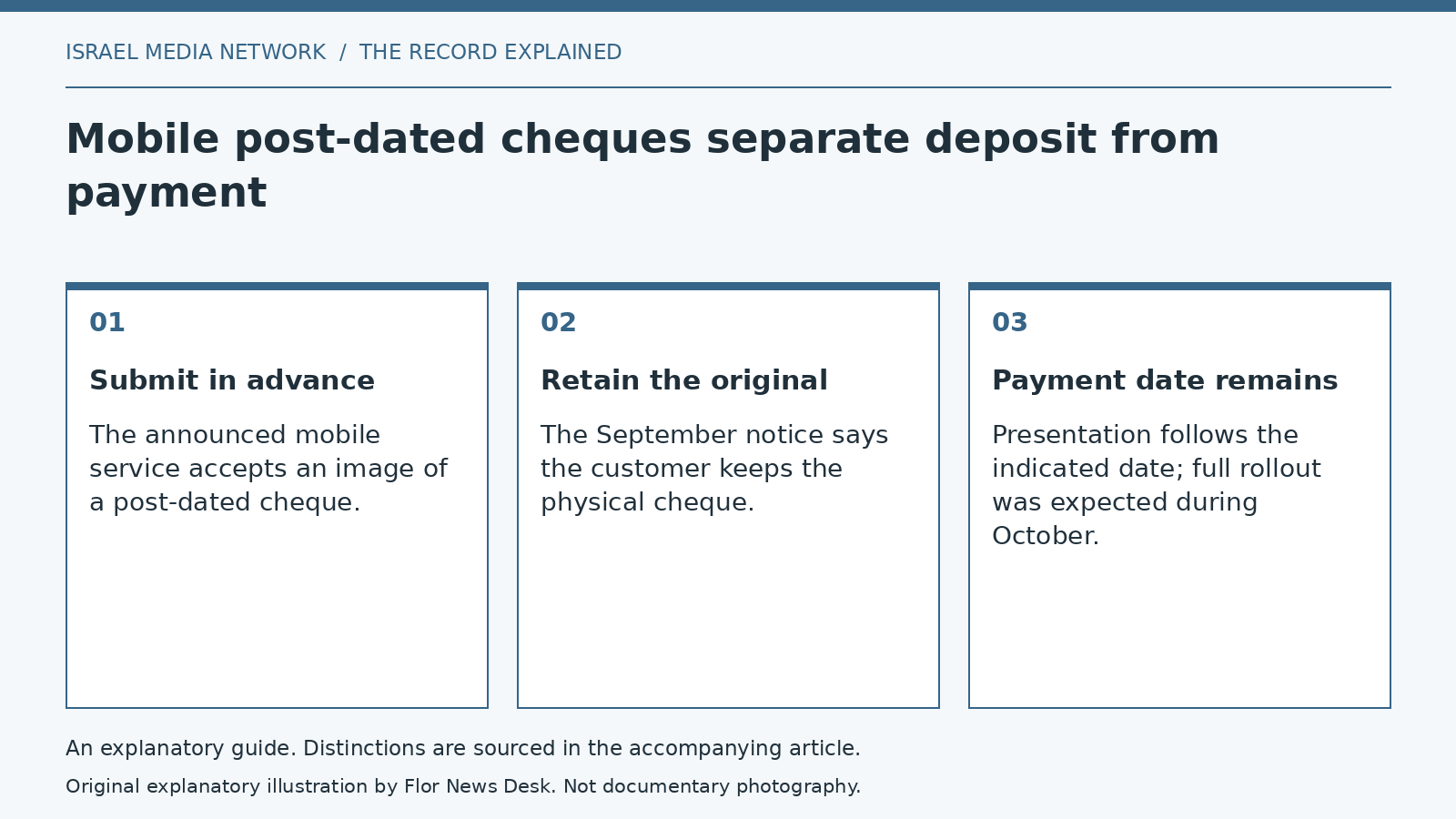

The Bank of Israel’s September 7 announcement introduced mobile deposit of post-dated cheques, with a gradual rollout following a September 2 effective date. It said full availability was expected during October. Those are different milestones; the announcement does not establish that every bank already offered the service on September 7.
The distinction inside the service is equally important. A customer submits an image in advance, while presentation for payment is tied to the date written on the cheque. Accepting the image is not a claim that the money becomes available immediately.
The paper does not disappear from the process
The notice describes initial limits of NIS 100,000 and a future period of up to thirteen months. It also says customers must retain the physical cheques. This differs from leaving a paper cheque in a bank’s physical custody, even though the initial submission moves onto a phone.
Consider an illustrative cheque dated for a later month. A successful upload today could record the instruction for later presentation. It would not logically establish that the account to be charged will contain sufficient funds on that future date. The example concerns the sequence of events, not the acceptance rules of a named bank.
The bank’s clearinghouse overview describes the institutional arrangements behind cheque clearing. It provides context for the processing network, not a confirmation of a particular customer’s payment. An app receipt and a settlement record document different stages.
Three dates to keep separate
The public announcement date tells readers when the change was explained. The bank-specific service availability date tells a customer whether that channel is operating. The cheque’s own payment date tells another part of the transaction’s story. A headline about digital deposit can hide these separate clocks.
The October wording is an expectation in the September announcement. A later confirmation would be needed before describing nationwide rollout as complete. There is no basis in this notice to assume that a successful upload removes the need to retain the original or overrides the future payment date.
The change is therefore best read as a new way to submit and store an instruction for later processing. That can alter the practical route through which a customer deals with a cheque without making deposit, acceptance and payment the same event. This article explains the announced process rather than advising on a specific disputed payment.